
Missing teeth can change more than a smile. Many people notice trouble chewing, shifting teeth, and less confidence when talking or laughing. Dental implants can help bring back comfort, function, and a natural look.
At The Center for Aesthetic and Implant Dentistry, dental implants are a major restorative service. Dr. Taylor Ruby, a general dentist, and Dr. Bryan Harris, a board-certified prosthodontist, work together to plan and restore implant smiles with careful detail. The goal is simple: replace missing teeth with strong, stable teeth that look and feel right for everyday life.
What Are Dental Implants?
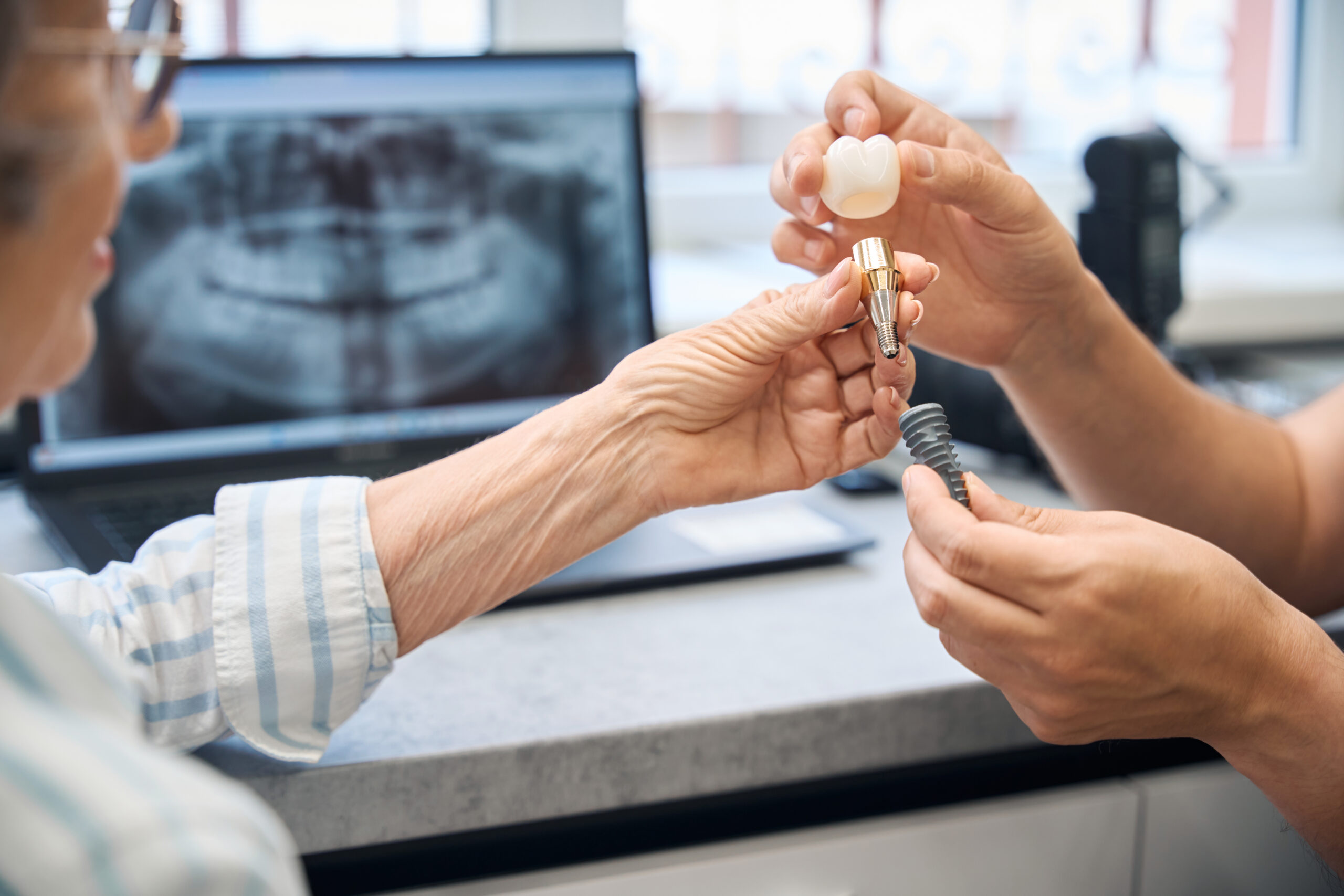
A dental implant is a small post, usually made of titanium, that is placed in the jawbone where a tooth is missing. Over time, the bone bonds to the implant. This creates a strong base, much like a natural tooth root.
Dental implants are not the same as a removable denture that sits on the gums. An implant is anchored in the bone, which helps support chewing and helps keep the jawbone healthy.
A complete implant tooth is often made up of three parts:
- The implant post that goes in the bone
- The connector piece that sits on top of the implant
- The final tooth (often a crown, bridge, or full-arch set of teeth)
Dental implants can replace one tooth, several teeth, or even a full arch of teeth. Because implants are used to rebuild the bite and restore function, planning matters. Dr. Bryan Harris focuses on complex tooth replacement and rebuilding worn or missing teeth. Dr. Taylor Ruby helps guide care with a whole-mouth view, making sure the implant plan supports healthy gums, healthy teeth, and a balanced bite.

Types of Dental Implants
There is not just one “implant” solution. The right choice depends on how many teeth are missing, the health of the gums and bone, and the goals for comfort and appearance. Below are four common implant solutions offered at The Center for Aesthetic and Implant Dentistry.
Single Tooth Implants
A single tooth implant replaces one missing tooth without involving the teeth next to it. The implant acts like the root, and a dental crown is placed on top to look like a natural tooth.
This option is often chosen when a tooth is lost from an injury, decay, or a failed root canal. It can be a great choice for the front or back of the mouth. A single tooth implant also helps keep nearby teeth from drifting into the empty space.
Multiple Tooth Implants
When several teeth are missing, implants can be used to support more than one replacement tooth. In some cases, two implants can support three or four teeth. This can reduce the need for one implant per missing tooth while still providing strong support.
Multiple tooth implant solutions can be helpful for people who have lost teeth in the same area, such as several back teeth on one side. The plan is built around a stable bite so chewing feels even and comfortable
Implant-Supported Bridge
An implant-supported bridge replaces several missing teeth in a row. Instead of using natural teeth as supports, the bridge is supported by implants. This can be a strong option when there is a longer space with multiple missing teeth.
An implant-supported dental bridge can:
- Restore chewing strength in a large gap
- Help keep the bite from collapsing in that area
- Avoid the need to shape down healthy neighboring teeth for a traditional bridge
Dr. Bryan Harris often designs implant-supported bridges with a focus on fit, function, and a natural look, especially when the bite has changed over time.
All-on-X
All-on-X is a full-arch implant solution for people missing all teeth in the upper arch, lower arch, or both. A set of teeth is supported by a small number of implants placed in key positions. The “X” stands for the number of implants used, which can vary based on the plan.
All-on-X can be a life-changing restorative option for people who:
- Are tired of loose dentures
- Have many failing teeth and want a fresh start
- Want stable teeth that stay in place for eating and speaking
This treatment requires careful planning so the teeth look right and the bite feels right. Dr. Bryan Harris plans the final tooth design with a prosthodontic approach, focusing on long-term function, comfort, and aesthetics.
What to Expect During the Implant Process
Getting dental implants is a process, but the steps are clear and guided. Every mouth is different, so the timeline can vary. Some patients need extra steps like bone grafting before implant placement. Others may be able to place implants sooner.
Here is what the dental implant process often includes:
- Consultation and exam: A full check of the teeth, gums, and bite. Records may include digital scans, X-rays, and 3D imaging.
- Treatment planning: A plan is built for where the implants go and what the final teeth will look like. This planning is important for comfort, speech, and chewing.
- Preparing the site if needed: If the jawbone is thin or the sinus area needs support, a bone graft or sinus lift may be recommended.
- Implant placement: The implant is placed in the jawbone. Comfort options are discussed ahead of time, and the team works to keep the visit calm and smooth.
- Healing and bonding time: The implant needs time to bond with the bone. This can take a few months, depending on the case.
- Final restoration: A crown, bridge, or full-arch set of teeth is attached once the implant is ready. Dr. Bryan Harris focuses on creating a restoration that fits the bite well and looks natural.
- Follow-up care: The team checks healing and bite comfort and gives guidance for cleaning around implants.
Many patients ask if there will be a tooth during healing. In many cases, a temporary tooth option can be used so the smile is not left with a visible gap. The best temporary choice depends on the area of the mouth and how the bite comes together.
Benefits of Dental Implants
Dental implants are popular because they restore both function and confidence. They are designed to feel more like natural teeth than many other tooth replacement options.
Key benefits often include:
- A strong bite for everyday eating: Implants help bring back chewing power for foods that can be hard with missing teeth, like meat, crunchy vegetables, or nuts.
- A natural look and feel: The final teeth are made to match the smile and fit the face. With careful planning, implants can look very natural.
- Support for jawbone health: When a tooth is missing, the bone in that area can shrink over time. An implant can help support the bone and keep the jaw shape more stable.
- No need to rely on neighboring teeth: A single tooth implant does not require shaping down the teeth next to the gap, like a traditional bridge may.
- Improved comfort and stability: Implants stay in place. This can reduce worry about slipping or movement during speech and meals.
- Long-term value: With good home care and regular dental visits, implants can last many years. The quality of planning and restoration matters, which is why the restorative focus at The Center for Aesthetic and Implant Dentistry is a key part of treatment.
Dental Implant FAQs
Read answers to common questions about implants in Louisville, KY.
Am I a candidate for dental implants?
Most adults with missing teeth are good candidates. You need healthy gums and enough jawbone to support the implant. If you’ve lost bone over time, a bone graft can rebuild it. Dr. Harris will evaluate your specific situation during your consultation.
How long do dental implants last?
With proper care, implants can last decades or even a lifetime. The implant post is made of titanium, which is biocompatible and durable. The crown attached to the implant may need replacement after 10 to 15 years due to normal wear, but the implant itself can last a lifetime.
Does getting dental implants hurt?
The procedure is done with local anesthesia, so you won’t feel pain during placement. If you’re anxious, we offer sedation options to help you relax. After the procedure, you may experience mild soreness or swelling, which usually goes away within a few days.
Will I be without a tooth during healing?
No. In most cases, we can provide a temporary tooth so you never have to go without a smile. The best option depends on the area of your mouth and how your bite comes together.
How do I care for my dental implants?
Treat your implants like natural teeth. Brush twice daily with a soft-bristled toothbrush and fluoride toothpaste. Floss daily, paying special attention to the area around the implant. We can also recommend using a water flosser or interdental brush to get between posts. Remember to visit us regularly for checkups so we can monitor your implant and gum health.
Request an Appointment for Dental Implants
A restored smile starts with a plan that fits real life. To learn which implant option makes the most sense, schedule a dental implant consultation at The Center for Aesthetic and Implant Dentistry. Dr. Taylor Ruby and Dr. Bryan Harris provide a clear path forward, from first exam to final restoration.
Request an appointment today to discuss dental implants, review imaging, and get a personalized treatment plan designed for comfort, function, and a natural-looking result. Call (502)-516-3896.